Trauma Care For civilians and non-medical professionals
Trauma Care For civilians and non-medical professionals
Couldn't load pickup availability
Course Overview
Overview
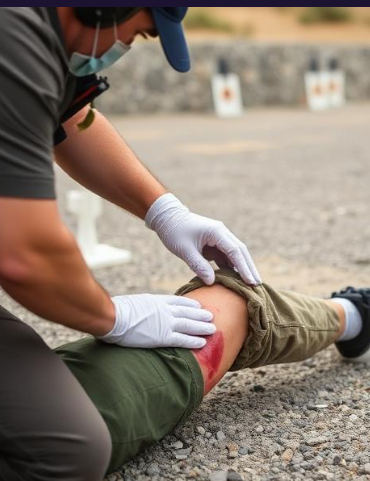
The Tactical Trauma Care Course is an intensive one-day (8-hour) program designed for professionals working in the firearms industry, including retail staff, range personnel, and firearms sales teams. The course focuses on practical trauma management skills for high-risk environments where immediate medical response may be required before EMS arrives.
Participants will gain hands-on experience in life-saving techniques, improve confidence under stress, and learn how to respond effectively to traumatic injuries commonly associated with tactical or firearms-related incidents. No prior medical training is required.
Who Should Attend
This course is ideal for:
· Firearms retail staff
· Shooting range employees
· Tactical equipment personnel
· Security professionals
· Non-medical civilians working in firearms-related environments
Course Details
· Duration: 1 Day (8 Hours)
· Class Size: Minimum 12 / Maximum 18 participants
· Age Requirement: 18+
· Location: Provided to registered participants
· Course Date: To Be Determined (confirmed at least 30 days prior)
What’s Included
Each participant receives:
· Trauma Care Aide-memoire
· Individual First Aid Kt contents
· Certificate(s) of Completion
Hands-On Skills Training
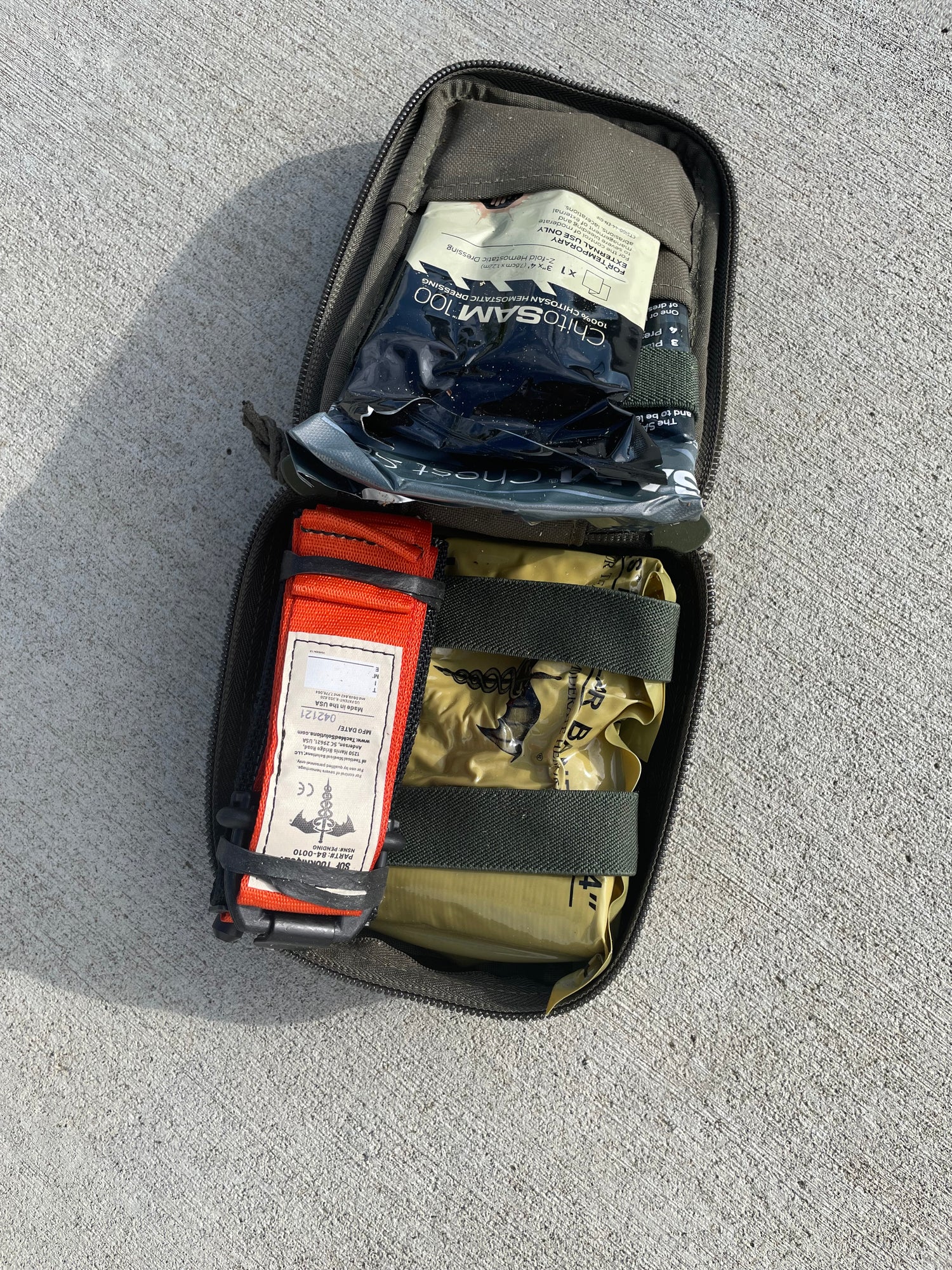
Participants will practice with industry-standard trauma equipment, including:
· Committee on Tactical Combat Casualty Care approved:
o Tourniquets
o Trauma dressings and pressure bandages various types.
o Hemostatic gauze products
o Chest seals
o Hypothermia management
· Improvised medical solutions for emergency situations
Course Objectives
Upon successful completion of this course, participants will be able to:
- Demonstrate safe scene assessment and identify immediate threats in firearms-related environments.
- Recognize and manage life-threatening traumatic injuries commonly associated with firearms incidents.
- Apply rapid bleeding control techniques using direct pressure, wound packing, trauma dressings, and commercial tourniquets.
- Perform basic airway management and support breathing emergencies until higher medical care arrives.
- Identify signs and symptoms of shock, respiratory compromise, and traumatic chest injuries.
- Safely manage firearm-related emergencies while maintaining situational awareness and scene safety.
- Demonstrate proper use and organization of trauma kits, range medical kits, and emergency response equipment.
- Develop and implement an effective emergency medical response plan for retail, training, and shooting range environments.
- Coordinate effectively with emergency medical services and communicate critical patient information during handoff.
- Apply critical thinking and decision-making skills during high-stress and rapidly evolving emergencies.
- Safely move and position injured persons while minimizing further injury.
- Demonstrate confidence and competency through realistic scenario-based training exercises.
- Understand the legal, ethical, and professional responsibilities associated with providing emergency medical care in firearms-related workplaces.
- Identify environmental and operational hazards associated with indoor and outdoor firearms environments, including heat injuries, burns, and biohazards.
- Improve preparedness, survivability, and team response capability during active threat or multiple casualty incidents.
Training Topics
Training includes classroom instruction, hands-on labs, and scenario-based exercises covering:
· Tactical trauma response principles
· Legal considerations in emergency medical care
· Concepts addressed using MARCHE
· Multiple casualty management
· Introduction to prolonged field care
Equipment & Dress Requirements
Participants are encouraged to bring operational gear they normally carry, such as:
· Duty belt
· Medical pouches or packs
· Eye protection
· Flashlight or chest-mounted lighting
Morning sessions are classroom-based with civilian attire recommended. Afternoon practical sessions may involve exposure to dirt or simulated blood, so durable clothing is advised.
Instructor Information
The course is led by Craig Keller, ACP, a senior paramedic and tactical medical instructor with nearly 30 years of emergency medical experience. His background includes disaster response, mass casualty management, and more than a decade as a SWAT Team Medic.
Additional Certifications Available
The following certifications can be added for an additional fee and extra time added to the course:
· CPR (Adult, Child, and Infant)
· Standard First Aid
· Basic Life Support (BLS)
Important Information
· Travel and accommodations are the responsibility of participants.
· No meals are provided.
· Photography and recording are prohibited without written approval.
· Participants must sign a liability waiver before training.
· All participant and client information remains confidential.
Contact InformationPhone: 1-780-984-9879
Email: sales@tmt-e.com